Ben Lerner: Brooklyn College's Autofiction Pioneer

Updated: Oct 7

A note from our founder
Our sixth tribute in this new chapter goes to a writer who turned a childhood spent in competitive debate into one of the most distinctive prose styles in contemporary fiction. Ben Lerner helped define an entire genre, and today he teaches the next generation of writers at Brooklyn College.
A Debate Kid From Topeka
Ben Lerner was born on February 4, 1979, in Topeka, Kansas, the son of two clinical psychologists. He grew up deeply immersed in competitive forensics and debate, formative experiences that left a clear mark on the rapid-fire, analytical quality of his writing. He earned a BA in political theory and an MFA in poetry, both from Brown University.
A Pioneer of Autofiction
Lerner is widely regarded as one of the defining pioneers of contemporary American autofiction, a genre that deliberately blurs the line between autobiography and fiction. His prose is intensely intellectual, self-aware, and often very funny, circling back again and again to the anxieties of authorship, the slipperiness of language, art theory, and the strange mechanics of modern life.
Decorated and Still Rising
Lerner's honors include a MacArthur "Genius" Fellowship, a Guggenheim Fellowship, and a Fulbright Scholarship, and his work has been shortlisted for both the National Book Award and the Pulitzer Prize for Fiction. He won the Orwell Prize for Political Fiction for his fourth novel, Transcription.
Teaching in Brooklyn
Alongside his writing career, Lerner is a Distinguished Professor of English at Brooklyn College and lives in Brooklyn, New York.
Bibliography
Fiction
Leaving the Atocha Station (2011) — Lerner's breakout debut novel following a young, neurotic American poet on a fellowship in Madrid, wandering through a hazy landscape of artistic fraudulence, translation errors, and historical gravity.
10:04 (2014) — Set against the backdrop of a changing New York City and a looming Hurricane Sandy, this meta-novel explores art, mortality, impending fatherhood, and late capitalism.
The Topeka School (2019) — A sprawling, multi-perspective generational epic that returns to Lerner's hometown in the 1990s, charting the toxic undercurrents of American masculinity, language, and public discourse through high school debate.
Transcription (2026) — His acclaimed, Orwell Prize-winning novel that blends technology, memory, and unreliable narratives, following a narrator conducting a critical final interview with an eccentric intellectual.
Poetry
The Lichtenberg Figures (2004) — A brilliant debut sonnet sequence exploring the intersections of violence, pop culture, and linguistic breakdown.
Angle of Yaw (2006) — A book-length collection of prose poems examining commercial culture, media spectacles, and modern perception (a National Book Award finalist).
Mean Free Path (2010) — A deeply formal, fractured sequence of love poems and elegies built on interrupted lines.
The Lights (2023) — A masterful career-spanning collection written over fifteen years, blending verse and prose to chart the passing of time.
Non-Fiction & Criticism
The Hatred of Poetry (2016) — A brilliant, book-length essay arguing that the bitter public frustration with poetry stems from the tragic gap between the transcendent potential of the art form and the flawed reality of actual poems.
READ LERNER
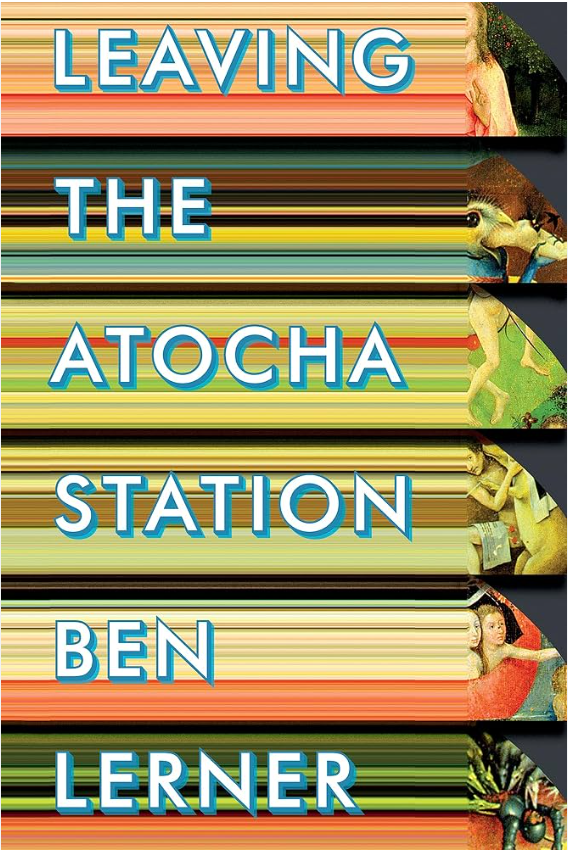
Start with Leaving the Atocha Station for the novel that launched him, or The Topeka School if you'd rather begin with his most ambitious work. Either way, you're reading a writer whose classroom is now in Brooklyn, still turning the same restless intelligence toward new students and new pages. Get the book.
As an Amazon Associate, Brooklyn Writers Press may earn from qualifying purchases made through links on this site. This comes at no additional cost to you and helps support our work honoring writers like Ben Lerner.


Comments