Carson McCullers: The Lonely Hunter of February House

Updated: Oct 7

A note from our founder
Our eighth tribute goes to a writer who understood loneliness better than almost anyone in American fiction — and who, for a few strange, brilliant years, found herself living in one of the least lonely households Brooklyn has ever seen.
From Columbus to Columbia
Carson McCullers was born Lula Carson Smith on February 19, 1917, in Columbus, Georgia. She moved to New York City at just seventeen, originally intending to study piano at Juilliard. When she lost her tuition money shortly after arriving, she turned fully toward her other passion, taking night classes at Columbia University and beginning the shift from music to fiction that would define the rest of her life.
Stratospheric Fame at Twenty-Three
That shift paid off almost immediately. McCullers published her debut novel, The Heart Is a Lonely Hunter, in 1940, at the age of twenty-three, and it made her famous overnight. Her writing was — and remains — remarkable for its haunting empathy, its focus on the spiritually isolated, and its sensitive attention to the inner lives of outcasts, misfits, and the queer community of the American South.
February House
That same year, McCullers moved into 7 Middagh Street in Brooklyn Heights, a sprawling, chaotic boarding house that editor Anaïs Nin nicknamed "February House," because so many of its residents happened to share February birthdays. It became one of the era's great artistic communes, housing McCullers alongside the poet W.H. Auden, novelist Thomas Mann's children, and burlesque star Gypsy Rose Lee. Amid all that noise and company, she produced some of her most acclaimed fiction.
A Life Marked by Illness
McCullers's life was shadowed by serious health struggles from a young age; a series of strokes beginning in her youth eventually left her partially paralyzed. She kept writing anyway, publishing steadily until her death at age 50 on September 29, 1967, in Nyack, New York.
Major Books & Works
Novels & Novellas
The Heart Is a Lonely Hunter (1940) — Her astonishing debut novel, set in a mill town in Georgia, centering on John Singer, a lonely deaf-mute man who becomes the sounding board and confidant for four other isolated townspeople.
Reflections in a Golden Eye (1941) — A dark, psychological novel written during her time in Brooklyn, exploring repressed homosexuality, obsession, and voyeurism on a Southern military base.
The Member of the Wedding (1946) — A masterpiece of adolescent psychology following Frankie Addams, a lonely 12-year-old tomboy who becomes pathologically obsessed with her older brother's upcoming wedding, desperate to belong to something.
The Ballad of the Sad Café (1951) — A brilliant, grotesque novella exploring the strange, shifting dynamics of a love triangle between a fiercely independent woman, a handsome convict, and a hunchbacked dwarf.
Clock Without Hands (1961) — Her final novel, weaving together themes of mortality, the changing racial landscape of the Jim Crow South, and the moral choices faced by a man diagnosed with leukemia.
Stage Plays
The Member of the Wedding (Play) (1950) — McCullers successfully adapted her own novel for the Broadway stage, winning the New York Drama Critics' Circle Award for Best Play.
READ MCCULLERS
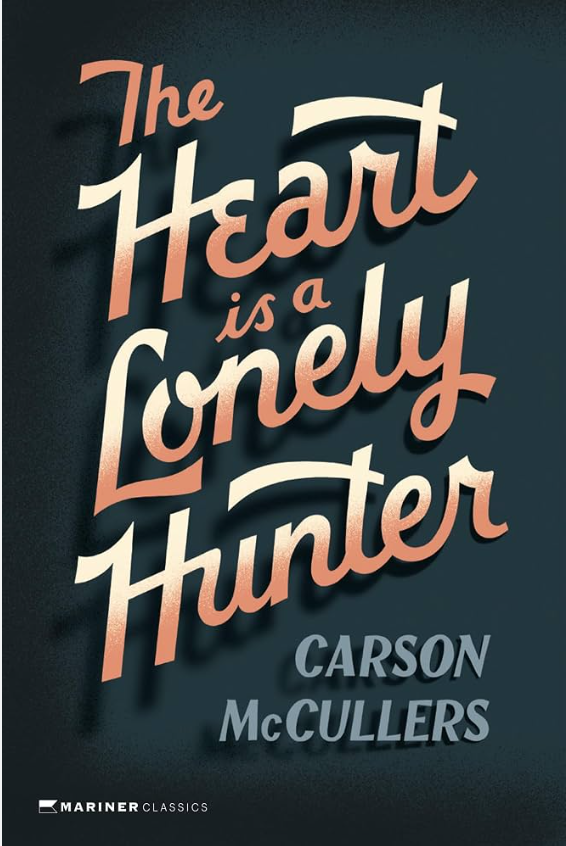
Start with The Heart Is a Lonely Hunter for the novel that made her name, or The Member of the Wedding if you'd rather begin with her most quietly devastating portrait of adolescence. Either way, it's worth remembering that some of this came together in a crowded, February-birthday house in Brooklyn Heights — proof that even a writer this attuned to loneliness could thrive in the middle of a crowd. Get the book.
As an Amazon Associate, Brooklyn Writers Press may earn from qualifying purchases made through links on this site. This comes at no additional cost to you and helps support our work honoring writers like Carson McCullers.


Comments