Colson Whitehead: Fort Greene's Double Pulitzer Winner

Updated: Oct 7

A note from our founder
This tribute opens a new chapter for us: writers who are still very much at work. Colson Whitehead built the early years of his novel-writing career out of a series of Fort Greene apartments, and he's gone on to become one of only four writers in history to win two fiction Pulitzers.
From Manhattan to Harvard
Colson Whitehead was born Arch Colson Chipp Whitehead on November 6, 1969, and raised in Manhattan. He graduated from Harvard University in 1991 and began his professional writing life as an editorial assistant and critic at The Village Voice, reviewing books, television, and music while drafting his earliest fiction on the side.
Finding His Voice in Fort Greene
Whitehead moved to Brooklyn around 1993 and stayed roughly eleven years, starting in an apartment in Fort Greene before later moves to Clinton Hill and Prospect Lefferts Gardens. Those years, spent largely in a series of Fort Greene apartments, were where he actually built his career as a novelist — he wrote five novels during that stretch, laying the foundation for everything that followed.
Genre-Bending, History-Bending
Few contemporary novelists move as freely across genre as Whitehead does. His work slides from post-apocalyptic horror and satirical comedy to historical fiction and crime noir, often within the same career-defining stretch, and it consistently returns to the complexities of race, class, and American history.
A Second Pulitzer, and Then Some
In 2020, Whitehead made history by winning his second Pulitzer Prize for Fiction for The Nickel Boys, becoming only the fourth writer ever to win two fiction Pulitzers and the first to win them for consecutive novels, following The Underground Railroad. His other honors include a MacArthur "Genius" Fellowship, a Guggenheim Fellowship, and the Library of Congress Prize for American Fiction. He now lives in Manhattan with his family, though he still keeps a home out in Sag Harbor.
Fiction
The Intuitionist (1999) — Debut novel centering on a division between elevator inspectors in a metaphorical mid-century metropolis.
John Henry Days (2001) — A multi-layered exploration of the American folklore legend and modern journalism.
Apex Hides the Hurt (2006) — A biting satire about a "nomenclature consultant" hired to rename a town.
Sag Harbor (2009) — A coming-of-age story about Black teenagers spending the summer of 1985 in Long Island.
Zone One (2011) — A literary, post-apocalyptic zombie novel set in a ruined Manhattan.
The Underground Railroad (2016) — A magical-realist historical novel where the historical escape network is reimagined as a literal subterranean train system.
The Nickel Boys (2019) — A devastating chronicle of abuse at a juvenile reformatory in Jim Crow-era Florida.
Harlem Shuffle (2021) — The first installment of his Harlem Trilogy; a 1960s crime caper and family saga.
Crook Manifesto (2023) — The second book in the Harlem Trilogy, continuing Ray Carney's story into the gritty 1970s.
Cool Machine (2026) — The final installment concluding his acclaimed Harlem Trilogy.
Non-Fiction
The Colossus of New York (2003) — A collection of evocative essays paying tribute to the rhythm and atmosphere of New York City.
The Noble Hustle: Poker, Beef Jerky & Death (2014) — A humorous, anxious chronicle of his journey competing in the 2011 World Series of Poker.
READ WHITEHEAD
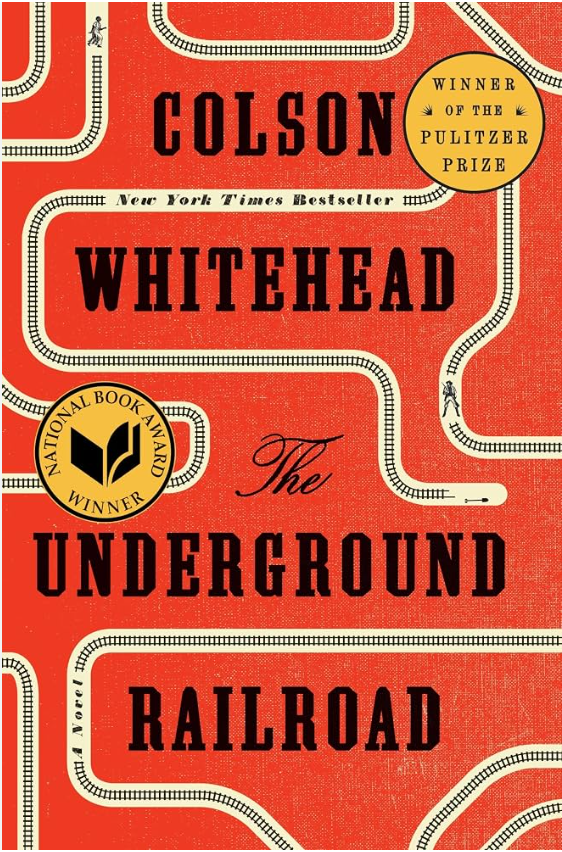
Start with The Underground Railroad or The Nickel Boys to see why the Pulitzer committee came calling twice, or Sag Harbor if you'd rather ease in with something lighter. Either way, it's worth remembering that a lot of the writer behind those books first took shape in a Fort Greene apartment, years before any of the awards arrived. Get the book.
As an Amazon Associate, Brooklyn Writers Press may earn from qualifying purchases made through links on this site. This comes at no additional cost to you and helps support our work honoring writers like Colson Whitehead.


Comments